Purchase
When performing a purchase, the customer scans the QR code displayed on the checkout page or in your system (when performing the purchase by using Gate).
| Countries and regions | Global |
| Payment currencies | All currencies except ARS, EGP, GHS, KES, NGN, RWF, TZS, UGX, XAF, XOF, ZAR. |
| Payment amount limits | Contact your key account manager at Monetix for details. Also you can check the payment amount limits in your project by using Dashboard. |
| Payment processing time | Contact your key account manager at Monetix for details. |
| Currency conversion | On the Monetix side |
| Refund |  |
| Onboarding and access fee | Contact your key account manager at Monetix for details. |
| Special considerations The QR code is valid only for 20 minutes. | |
Operations support
| Interfaces | |||
|---|---|---|---|
| Payment Page | Gate | Dashboard | |
| Purchase | |
|
|
| Recurring registration | |
|
 |
| Recurring performing | |
|
|
| Refund | |
|
|
You can check the payment amount limits in your project by using Dashboard. To check your payment amount limits, go to Dashboard, select the Projects section, and then click the Payment methods tab.
The following sections provide more information about the payment processing flow and the analysis of completed payments.
Purchase by using Payment Page
General information
To perform a purchase by using Payment Page with the Binance Pay payment method:
- Send a request with all the required parameters and signature to the Monetix URL.
- Accept the callback with the purchase result from the payment platform.
The following figure shows the complete purchase processing flow in the Binance Pay payment method.
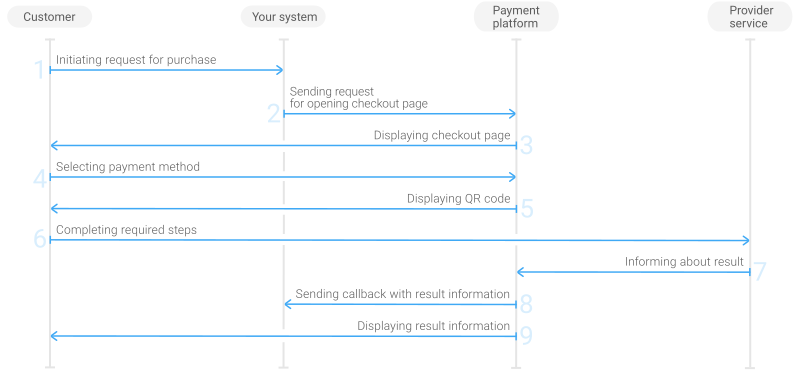
- The customer initiates a purchase in your system.
- Your system sends the request for the purchase through Payment Page to the Monetix URL.
- The checkout page is displayed to the customer.
- The customer chooses to make a purchase with the Binance Pay payment method.
- The checkout page displays the QR code to the customer.
- The customer completes the purchase.
- The provider service sends the purchase result information to the payment platform.
- The payment platform sends a callback with the payment result to your system.
- The payment platform displays the payment result to the customer on the checkout page.
Request
The following table lists the parameters that you have to include in the request for purchase through the checkout page with the Binance Pay payment method.
|
||
|---|---|---|
| Parameter | Description | |
project_id | Project ID you obtained from Monetix when integrating. Example: | |
payment_id | Payment ID unique within your project. Example: | |
customer_id | Unique ID of the customer within your project. Example: | |
customer_first_name | Customer's first name. Example: | |
customer_last_name | Customer's last name. Example: | |
customer_email | Customer's email. Example: | |
payment_currency | Code of the payment currency in the ISO-4217 alpha-3 format.
Example: | |
payment_amount | Payment amount in minor currency units without any decimal point or comma except for the cases when the currency doesn't have any minor currency units. If the currency doesn't have any minor units (i.e. the number of digits for minor currency units is zero), set this parameter to the amount in the major currency units. To check whether the currency has any minor units, see Currency units and Currency codes. Example: 100.00 EUR must be sent as | |
force_payment_method | Parameter that allows you to enforce the Binance Pay payment method for your customer and skip the page with payment method selections. To enforce the Binance Pay payment method and skip the page with payment method selection, add the force_payment_method parameter to the request and set its value to Example: | |
recurring | Add this parameter to register the COF purchase and set its value to the URL-encoded JSON object with the COF purchase parameters. Here is an example of such a JSON object (before URL-encoding): {"register":true}Example: | |
signature | Signature created after you've specified all the request parameters. For more information about signature generation, see Signature generation and verification. | |
| You can also add any other optional parameters to the request, if necessary. For the list of all the parameters possible in requests to Payment Page, see Payment Page invocation parameters. | ||
Here is an example of the data from a request to open the checkout page by using
EPayWidget:
EPayWidget.run(
	{
		project_id: 1234,
		payment_id: 'payment_47',
		customer_id: 'customer_123',
		customer_first_name: 'John',
		customer_last_name: 'Doe',
		customer_email: 'johndoe@example.com',
		payment_currency: 'EUR',
		payment_amount: 10000,
		force_payment_method: 'unify_Binance_Pay',
		recurring: '%7B%22register%22%3Atrue%7D',
		signature: 'kUi2x9dKHAVNU0FYldJrxh4yo+52Kt8KU+Y19vySO/RLUkDJrOcZzUCwX6R/ekpZhkIQg=='
	}
)
Callback
In the Binance Pay payment method, the payment platform returns the purchase result in a callback. For the information about the callback structure, see Callbacks in Payment Page.
If the purchase request to the payment platform contains a COF registration parameter and the provider service processes this request successfully, the final callback from the payment platform will contain a recurring object with the identifier of the registered COF purchase in the id parameter.
The following is an example of a callback body with information about a successfully completed purchase.
{
    "project_id": 1234,
    "payment": {
        "id": "payment_47",
        "type": "purchase",
        "status": "success",
        "date": "2024-12-07T19:08:45+0000",
        "method": "unify",
        "sum": {
            "amount": 10000,
            "currency": "EUR"
        },
        "description": ""
    },
    "customer": {
        "id": "customer_123"
    },
    "operation": {
        "id": 47,
        "type": "sale",
        "status": "success",
        "date": "2024-12-07T19:08:45+0000",
        "created_date": "2024-12-07T19:08:05+0000",
        "request_id": "1a23456bc7890de",
        "sum_initial": {
            "amount": 10000,
            "currency": "EUR"
        },
        "sum_converted": {
            "amount": 10000,
            "currency": "EUR"
        },
        "code": "0",
        "message": "Success",
        "provider": {
            "id": 12345,
            "payment_id": "123abc123-123",
            "auth_code": ""
        }
    },
    "recurring": {
        "id": 12345
    },
    "signature": "U7HQO7ToISZhMPKdM4XrUKQtoYzFvoB3cs9CRd4xeYG2Q=="
}
The following is an example of a callback for a declined purchase.
{
    "project_id": 1234,
    "payment": {
        "id": "payment_47",
        "type": "purchase",
        "status": "decline",
        "date": "2024-12-07T19:08:45+0000",
        "method": "unify",
        "sum": {
            "amount": 10000,
            "currency": "EUR"
        },
        "description": ""
    },
    "customer": {
        "id": "customer_123"
    },
    "operation": {
        "id": 47,
        "type": "sale",
        "status": "decline",
        "date": "2024-12-07T19:08:45+0000",
        "created_date": "2024-12-07T19:08:05+0000",
        "request_id": "1a23456bc7890de",
        "sum_initial": {
            "amount": 10000,
            "currency": "EUR"
        },
        "sum_converted": {
            "amount": 10000,
            "currency": "EUR"
        },
        "code": "20000",
        "message": "General decline",
        "provider": {
            "id": 12345,
            "payment_id": "123abc123-123",
            "auth_code": ""
        }
    },
    "signature": "U7HQO7ToISZhMPKdM4XrUKQtoYzFvoB3cs9CRd4xeYG2Q=="
}
Purchase by using Gate
General information
To perform a purchase by using Gate with the Binance Pay payment method:
- Send a request with all the required parameters and signature to the Monetix URL.
- Show the screen with a payment QR code to the customer.
- Accept the callback with the purchase result from the payment platform.
The following figure provides the details of the purchase processing flow in the Binance Pay payment method.
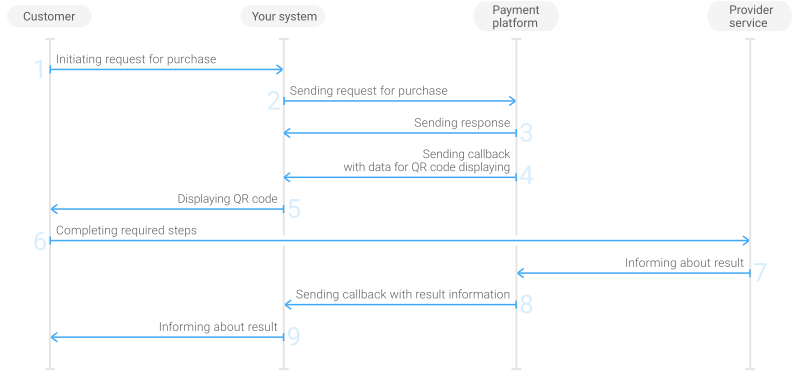
- The customer initiates a purchase in your system.
- Your system sends the purchase request to the Monetix payment platform.
- The payment platform sends you a response in which it acknowledges your request and provides the request validation result. (For more information about the response format, see Response structure.)
- The payment platform generates the data for displaying the payment QR code to the customer and sends the data to your system in the display_data array.
- Your system displays the QR code to the customer.
- The customer completes the purchase.
- The provider service informs the payment platform about the purchase result.
- The payment platform sends the callback with the payment result to your system.
- Your system sends the payment result to the customer.
Request
This section provides the instructions on how to build the request for purchase with the Binance Pay payment method.
| HTTP request method | POST |
| Request body format | JSON |
| API endpoint | /v2/payment/unify/sale |
|
|||
|---|---|---|---|
| Object | Parameter | Description | |
general | project_id | Project ID you obtained from Monetix when integrating. Example: | |
payment_id | Payment ID unique within your project. Example: | ||
signature | Signature created after you've specified all the request parameters. For more information about signature generation, see Signature generation and verification. | ||
customer | id | Unique ID of the customer within your project. Example: | |
ip_address | IP address of the customer's device. Example: | ||
first_name | Customer's first name. Example: | ||
last_name | Customer's last name. Example: | ||
email | Customer's email. Example: | ||
payment | currency | Code of the payment currency in the ISO-4217 alpha-3 format. Example: | |
amount | Payment amount in minor currency units without any decimal point or comma except for the cases when the currency doesn't have any minor currency units. If the currency doesn't have any minor units (i.e. the number of digits for minor currency units is zero), set this parameter to the amount in the major currency units. To check whether the currency has any minor units, see Currency units and Currency codes. Example: 100.00 EUR must be sent as | ||
by_method | The payment method's code. Pass BinancePay in this parameter.Example: | ||
return_url | success | The URL to redirect the customer to after the payment is successfully completed. Example: | |
decline | The URL to redirect the customer to after the payment is declined. Example: | ||
return | The URL to redirect the customer to when they prematurely terminate the payment. This URL is also used if the success and decline parameters are not specified in the request. If you don't specify any parameters of the return_url object in the request, by default Gate will redirect the customer to the URL specified in your project in Monetix. Example: | ||
recurring | register | COF purchase registration flag; use true value to have a COF purchase registered.Example: | |
| You can also add any other optional parameters to the purchase request, if necessary. For the list of all the parameters available in Gate, see API Reference. | |||
Here is an example of the data from a request to initiate a purchase with the Binance Pay payment method:
{
    "general": {
        "project_id": 1234,
        "payment_id": "payment_47",
        "signature": "kUi2x9dKHAVNU0FYldJrxh4yo+52Kt8KU+Y19vySO/RLUkDJrOcZzUCwX6R/ekpZhkIQg=="
    },
    "customer": {
        "id": "customer_123",
        "ip_address": "198.51.100.47",
        "first_name": "John",
        "last_name": "Doe",
        "email": "johndoe@example.com"
    },
    "payment": {
        "currency": "EUR",
        "amount": 10000,
        "by_method": "BinancePay"
    },
    "return_url": {
        "success": "https://example.com/success/",
        "decline": "https://example.com/decline/",
        "return": "https://example.com/return/"
    },
    "recurring": {
        "register": true
    }
}
Displaying the payment QR code to the customer
After receiving and processing your purchase request, the payment platform sends you the callback with the data for displaying the payment QR code to the customer.
Use the data from the display_data array to display the QR code to the customer.
There are several ways the display_data array can be structured. All of them are described below. Reach out to the Monetix support team (support@monetix.pro) to know which option is relevant to you.
Option 1
| Element | Description |
|---|---|
{
    "type": "qr_url",
    "title": "qr_url",
    "data": "https://example.com/qr.jpg"
}
|
The element containing the link to the QR code that should be displayed to the customer. Example: |
{
    "type": "add_info",
    "title": "checkouturl",
    "data": "https://app.binance.com/payment/secpay"
}
|
The element containing the link for redirecting the customer to their personal account on the Binance website. Used if the customer does not succeed in scanning the QR code and the Binance app is not installed on their device. Example: |
{
    "type": "add_info",
    "title": "app_url",
    "data": "bnc://app.binance.com/payment/secpay"
}
|
The element containing the link for opening the Binance app. Used if the customer does not succeed in scanning the QR code and the Binance app is installed on their device. Example: |
The following is the callback fragment containing display_data array.
"display_data": [
    {
        "type": "qr_url",
        "title": "qr_url",
        "data": "https://example.com/qr.jpg"
    },
    {
        "type": "add_info",
        "title": "checkouturl",
        "data": "https://app.binance.com/payment/secpay"
    },
    {
        "type": "add_info",
        "title": "app_url",
        "data": "bnc://app.binance.com/payment/secpay"
    }
]
Option 2
| Element | Description |
|---|---|
{
    "type": "qr_url",
    "title": "qr_url",
    "data": "https://example.com/qr.jpg"
}
|
The element containing the link to the QR code that should be displayed to the customer. Example: |
{
    "type": "add_info",
    "title": "checkouturl",
    "data": "https://app.binance.com/payment/secpay"
}
|
The element containing the link for redirecting the customer to their personal account on the Binance website. Used if the customer does not succeed in scanning the QR code and the Binance app is not installed on their device. Example: |
{
    "type": "add_info",
    "title": "app_url",
    "data": "bnc://app.binance.com/payment/secpay"
}
|
The element containing the link for opening the Binance app. Used if the customer does not succeed in scanning the QR code and the Binance app is installed on their device. Example: |
{
    "type": "add_info",
    "title": "universalurl",
    "data": "https://app.binance.com/payment/secpay"
}
|
The element containing the universal link for redirecting the customer to their personal account on the Binance website and to their app (if it is installed on their device). Used if the customer does not succeed in scanning the QR code. Example: |
{
    "type": "add_info",
    "title": "expired_timestamp",
    "data": "1707411997"
}
|
The element containing the data about the due date of the payment. The due date of the payment is specified in the Unix time format (in seconds). Example: |
The following is the callback fragment containing display_data array.
"display_data": [
    {
        "type": "qr_url",
        "title": "qr_url",
        "data": "https://example.com/qr.jpg"
    },
    {
        "type": "add_info",
        "title": "checkouturl",
        "data": "https://app.binance.com/payment/secpay"
    },
    {
        "type": "add_info",
        "title": "app_url",
        "data": "bnc://app.binance.com/payment/secpay"
    },
    {
        "type": "add_info",
        "title": "universalurl",
        "data": "https://app.binance.com/payment/secpay"
    },
    {
        "type": "add_info",
        "title": "expired_timestamp",
        "data": "1707411997"
    }
]
Callback
In the Binance Pay payment method, the payment platform returns the purchase result in a callback. For the information about the callback structure, see Callbacks in Gate.
If the purchase request to the payment platform contains a COF registration parameter and the provider service processes this request successfully, the final callback from the payment platform will contain a recurring object with the identifier of the registered COF purchase in the id parameter.
The following is an example of a callback body with the information about a successfully completed purchase.
{
    "project_id": 1234,
    "payment": {
        "id": "payment_47",
        "type": "purchase",
        "status": "success",
        "date": "2024-12-07T19:08:45+0000",
        "method": "unify",
        "sum": {
            "amount": 10000,
            "currency": "EUR"
        },
        "description": ""
    },
    "customer": {
        "id": "customer_123"
    },
    "operation": {
        "id": 47,
        "type": "sale",
        "status": "success",
        "date": "2024-12-07T19:08:45+0000",
        "created_date": "2024-12-07T19:08:05+0000",
        "request_id": "1a23456bc7890de",
        "sum_initial": {
            "amount": 10000,
            "currency": "EUR"
        },
        "sum_converted": {
            "amount": 10000,
            "currency": "EUR"
        },
        "code": "0",
        "message": "Success",
        "provider": {
            "id": 12345,
            "payment_id": "123abc123-123",
            "auth_code": ""
        }
    },
    "recurring": {
        "id": 12345
    },
    "signature": "U7HQO7ToISZhMPKdM4XrUKQtoYzFvoB3cs9CRd4xeYG2Q=="
}
The following is an example of a callback for a declined purchase.
{
    "project_id": 1234,
    "payment": {
        "id": "payment_47",
        "type": "purchase",
        "status": "decline",
        "date": "2024-12-07T19:08:45+0000",
        "method": "unify",
        "sum": {
            "amount": 10000,
            "currency": "EUR"
        },
        "description": ""
    },
    "customer": {
        "id": "customer_123"
    },
    "operation": {
        "id": 47,
        "type": "sale",
        "status": "decline",
        "date": "2024-12-07T19:08:45+0000",
        "created_date": "2024-12-07T19:08:05+0000",
        "request_id": "1a23456bc7890de",
        "sum_initial": {
            "amount": 10000,
            "currency": "EUR"
        },
        "sum_converted": {
            "amount": 10000,
            "currency": "EUR"
        },
        "code": "20000",
        "message": "General decline",
        "provider": {
            "id": 12345,
            "payment_id": "123abc123-123",
            "auth_code": ""
        }
    },
    "signature": "U7HQO7ToISZhMPKdM4XrUKQtoYzFvoB3cs9CRd4xeYG2Q=="
}
COF purchase by using Gate
General information
The Binance Pay payment method provides the ability to perform COF purchases—regular on-demand payments. For more information about COF purchases, see On-demand COF purchase: workflow and statuses.
This section describes how to perform a new payment within registered a COF purchase. For information on how to register a COF purchase, see the Request sections of the topics about purchase with Payment Page and Gate.
In the Binance Pay method, your system is required to do the following when processing a payment within the registered COF purchase by using Gate:
- Send the request with all the required parameters and a signature to the Monetix URL to initiate a COF payment.
- Accept the callback with the COF payment result from the payment platform.
The following diagram provides the detailed picture of the processing flow of a payment within a registered COF purchase.
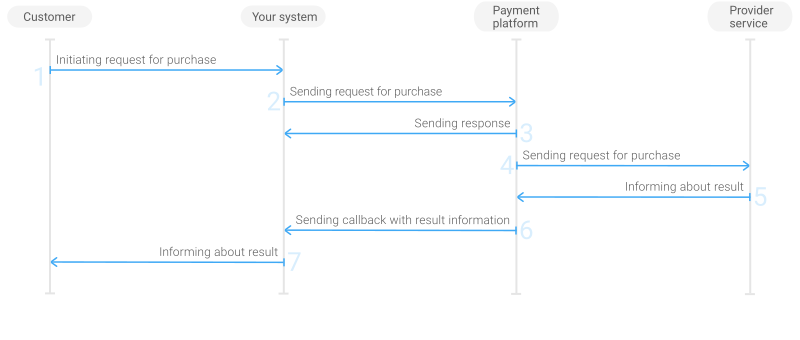
- The customer initiates a new payment within the registered COF purchase on your system's side. This step is optional.
- Your system sends a request for processing the COF payment by using Gate to the Monetix URL.
- The payment platform receives the request for processing the COF payment and sends the response with request receipt confirmation and validation result to the your system. For more information about the response format, see Response structure.
- The payment platform performs the internal payment request processing and forwards the request to the provider service.
- The provider service processes the request and sends the payment result notification to the payment platform.
- The payment platform sends the callback with the payment result to your system.
- Your system sends the payment result to the customer.
Request for a COF purchase
This section provides the instructions on how to build a request for a COF purchase with the Binance Pay payment method.
| HTTP request method | POST |
| Request body format | JSON |
| API endpoint | /v2/payment/unify/recurring |
|
||||
|---|---|---|---|---|
| Object | Parameter | Description | ||
|
general |
project_id |
Project ID you obtained from Monetix when integrating. Example: |
||
|
payment_id |
Payment ID unique within your project. Example: |
|||
|
signature |
Signature created after you've specified all the request parameters. For more information about signature generation, see Signature generation and verification. |
|||
|
customer |
id |
Unique ID of the customer within your project. Example: |
||
|
ip_address |
IP address of the customer's device. Example: |
|||
|
email |
Customer's email. Example: |
|||
|
first_name |
Customer's first name. Example: |
|||
|
last_name |
Customer's last name. Example: |
|||
|
payment |
amount |
Purchase amount in minor currency units without any decimal point or comma except for the cases when the currency doesn't have any minor currency units. The amount and currency must match the values in the auth request. If the currency doesn't have any minor units (i.e. the number of digits for minor currency units is zero), set this parameter to the amount in the major currency units. To check whether the currency has any minor units, see Currency codes. Example: 100.00
EUR must be sent as |
||
|
currency |
Code of the purchase currency in the ISO-4217 alpha-3 format. Example: |
|||
|
recurring |
id |
ID of the COF purchase. It is sent in a callback after a successful COF purchase registration. Example: |
||
| You can also add any other optional parameters to the purchase request, if necessary. For the list of all the parameters available in Gate, see API Reference. | ||||
Here is an example of data from a COF purchase request.
{
    "general": {
        "project_id": 123,
        "payment_id": "payment_47",
        "signature": "DH0v2pZnkK9hwytQ6/ZtDSQh+wwx/OqrWdbltzO5GMSkzd0Iq6lM2"
    },
    "customer": {
        "id": "customer_123",
        "ip_address": "198.51.100.47",
        "first_name": "John",
        "last_name": "Doe",
        "email": "johndoe@example.com"
    },
    "payment": {
        "amount": 10000,
        "currency": "EUR"
    },
    "recurring": {
        "id": 12345
    }
}
Callback
The standard format for callbacks is used to deliver the results of actions with COF purchases. For more information, see Callbacks in Gate.
The following is an example of a callback with an information about successful COF purchase.
 {
    "project_id": 123,
    "payment": {
        "id": "payment_47",
        "type": "recurring",
        "status": "success",
        "date": "2018-11-20T08:44:46+0000",
        "method": "unify",
        "sum": {
            "amount": 10000,
            "currency": "EUR"
        },
        "description": "payment"
    },
    "account": {
        "number": "123456"
    },
    "recurring": {
        "id": 12345,
        "currency": "",
        "valid_thru": "-0001-11-30T00:00:00+0000"
    },
    "operation": {
        "id": 28,
        "type": "recurring",
        "status": "success",
        "date": "2018-11-20T08:44:46+0000",
        "created_date": "2018-11-20T08:44:41+0000",
        "request_id": "07fd7ade7cf010",
        "sum_initial": {
            "amount": 10000,
            "currency": "EUR"
        },
        "sum_converted": {
            "amount": 10000,
            "currency": "EUR"
        },
        "provider": {
            "id": 1187,
            "payment_id": "1234567890",
            "date": "2020-11-20T08:44:45+0000",
            "auth_code": ""
        },
        "code": "0",
        "message": "Success"
    },
    "signature": "x2tsnvLCRXZMX8Kwyr9a8+I3RipuPWUod5c89cDSQ6cRq=="
}
The following is an example of a callback with an information about declined COF purchase.
{
    "project_id": 123,
    "payment": {
        "id": "payment_47",
        "type": "recurring",
        "status": "success",
        "date": "2018-11-20T08:44:46+0000",
        "method": "unify",
        "sum": {
            "amount": 10000,
            "currency": "EUR"
        },
        "description": "payment"
    },
    "errors": [
        {
            "code": "2701",
            "message": "Rules Failed Code",
            "description": "fatal: RULES_FAILED_CODE"
        }
    ],
    "recurring": {
        "id": 12345,
        "currency": "",
        "valid_thru": "-0001-11-30T00:00:00+0000"
    },
    "operation": {
        "id": 28,
        "type": "recurring",
        "status": "decline",
        "date": "2018-11-20T08:44:46+0000",
        "created_date": "2018-11-20T08:44:41+0000",
        "request_id": "07fd7ade7cf010",
        "sum_initial": {
            "amount": 10000,
            "currency": "EUR"
        },
        "sum_converted": {
            "amount": 10000,
            "currency": "EUR"
        },
        "provider": {
            "id": 1187,
            "payment_id": "1234567890",
            "date": "2020-11-20T08:44:45+0000",
            "auth_code": ""
        },
        "code": "2701",
        "message": "Rules Failed Code"
    },
    "signature": "x2tsnvLCRXZMX8Kwyr9a8+I3RipuPWUod5c89cDSQ6cRq=="
}
Refund by using Gate
General information
To perform a refund by using Gate for a purchase made with the Binance Pay payment method:
- Send a request with all the required parameters and signature to the Monetix URL.
- Accept the callback with the refund result from the payment platform.
The following picture provides all the details of the refund processing flow in the Binance Pay payment method.
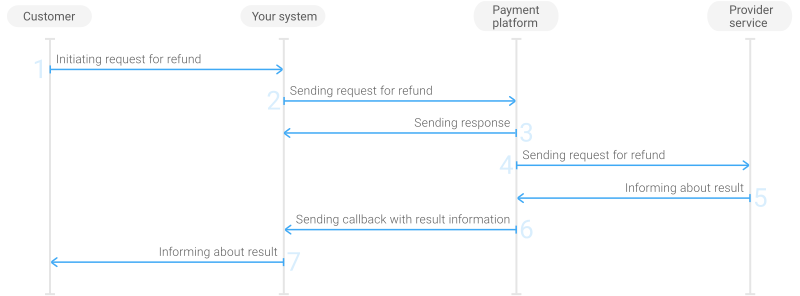
- The customer initiates a refund in your system.
- Your system sends the refund request to the Monetix payment platform.
- The payment platform sends you a response in which it acknowledges your request and provides the request validation result. (For more information about the response format, see Response structure.)
- The payment platform processes the request and forwards it to the provider service.
- The provider service informs the payment platform about the refund result.
- The payment platform sends you the callback with the refund result.
- Your system sends the refund result to the customer.
Request
This section provides the instructions on how to build the request for refund with the Binance Pay payment method.
| HTTP request method | POST |
| Request body format | JSON |
| API endpoint | /v2/payment/unify/refund |
|
|||
|---|---|---|---|
| Object | Parameter | Description | |
general | project_id | Project ID you obtained from Monetix when integrating. Example: | |
payment_id | ID of the payment the refund is performed for Example: | ||
signature | Signature created after you've specified all the request parameters. For more information about signature generation, see Signature generation and verification. | ||
payment | currency | Code of the payment currency in the ISO-4217 alpha-3 format. This parameter is required when performing a partial refund. Example: | |
amount | Payment amount in minor currency units without any decimal point or comma except for the cases when the currency doesn't have any minor currency units. If the currency doesn't have any minor units (i.e. the number of digits for minor currency units is zero), set this parameter to the amount in the major currency units. To check whether the currency has any minor units, see Currency units and Currency codes. This parameter is required when performing a partial refund. Example: 100.00 EUR must be sent as | ||
description | Refund description. Example: | ||
by_method | The payment method's code. Pass BinancePay in this parameter.Example: | ||
| You can also add any other optional parameters to the refund request, if necessary. For the list of all the parameters available in Gate, see API Reference. | |||
Here is an example of the data from a request to initiate a refund with the Binance Pay payment method:
{
    "general": {
        "project_id": 1234,
        "payment_id": "payment_47",
        "signature": "kUi2x9dKHAVNU0FYldJrxh4yo+52Kt8KU+Y19vySO/RLUkDJrOcZzUCwX6R/ekpZhkIQg=="
    },
    "payment": {
        "currency": "EUR",
        "amount": 10000,
        "description": "Refund description.",
        "by_method": "BinancePay"
    }
}
Callback
In the Binance Pay payment method, the payment platform returns the refund result in a callback. For the information about the callback structure, see Callbacks in Gate.
The following is an example of a callback body with the information about a successfully completed refund.
{
    "project_id": 1234,
    "payment": {
        "id": "payment_47",
        "type": "purchase",
        "status": "refunded",
        "date": "2024-12-07T19:08:45+0000",
        "method": "unify",
        "sum": {
            "amount": 0,
            "currency": "EUR"
        },
        "description": ""
    },
    "customer": {
        "id": "customer_123"
    },
    "operation": {
        "id": 47,
        "type": "refund",
        "status": "success",
        "date": "2024-12-07T19:08:45+0000",
        "created_date": "2024-12-07T19:08:05+0000",
        "request_id": "1a23456bc7890de",
        "sum_initial": {
            "amount": 10000,
            "currency": "EUR"
        },
        "sum_converted": {
            "amount": 10000,
            "currency": "EUR"
        },
        "code": "0",
        "message": "Success",
        "provider": {
            "id": 12345,
            "payment_id": "123abc123-123",
            "auth_code": ""
        }
    },
    "signature": "U7HQO7ToISZhMPKdM4XrUKQtoYzFvoB3cs9CRd4xeYG2Q=="
}
The following is an example of a callback for a declined refund.
{
    "project_id": 1234,
    "payment": {
        "id": "payment_47",
        "type": "purchase",
        "status": "success",
        "date": "2024-12-07T19:08:45+0000",
        "method": "unify",
        "sum": {
            "amount": 10000,
            "currency": "EUR"
        },
        "description": ""
    },
    "customer": {
        "id": "customer_123"
    },
    "operation": {
        "id": 47,
        "type": "refund",
        "status": "decline",
        "date": "2024-12-07T19:08:45+0000",
        "created_date": "2024-12-07T19:08:05+0000",
        "request_id": "1a23456bc7890de",
        "sum_initial": {
            "amount": 10000,
            "currency": "EUR"
        },
        "sum_converted": {
            "amount": 10000,
            "currency": "EUR"
        },
        "code": "20000",
        "message": "General decline",
        "provider": {
            "id": 12345,
            "payment_id": "123abc123-123",
            "auth_code": ""
        }
    },
    "signature": "U7HQO7ToISZhMPKdM4XrUKQtoYzFvoB3cs9CRd4xeYG2Q=="
}